Hype or measurable results? We put the bike benefit to the test
"The bike benefit improves employee wellbeing and reduces sick leave," claim providers. But is it truly a solution to wellbeing challenges or just marketing? We dug deeper and let both users and HR leaders share the truth.
Question 1: How does the bike benefit increase activity and support health?
We asked 2,178 benefit bike users how the benefit has affected their daily life and wellbeing. The results are clear:
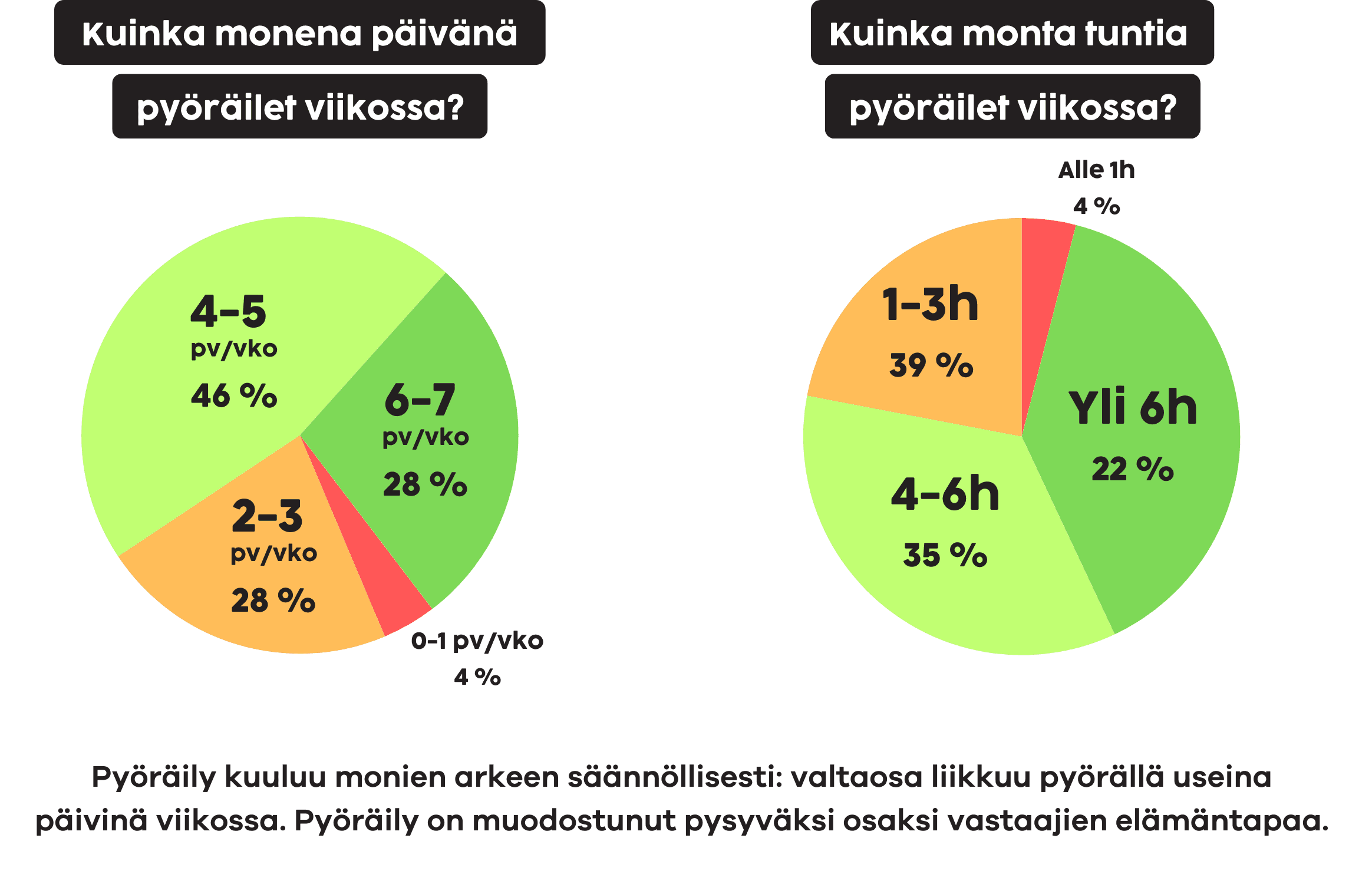
- 80% cycle 4–7 times per week.
- On average, respondents cycle 91.2 km per week.
- 71% feel their physical or mental fitness has improved.
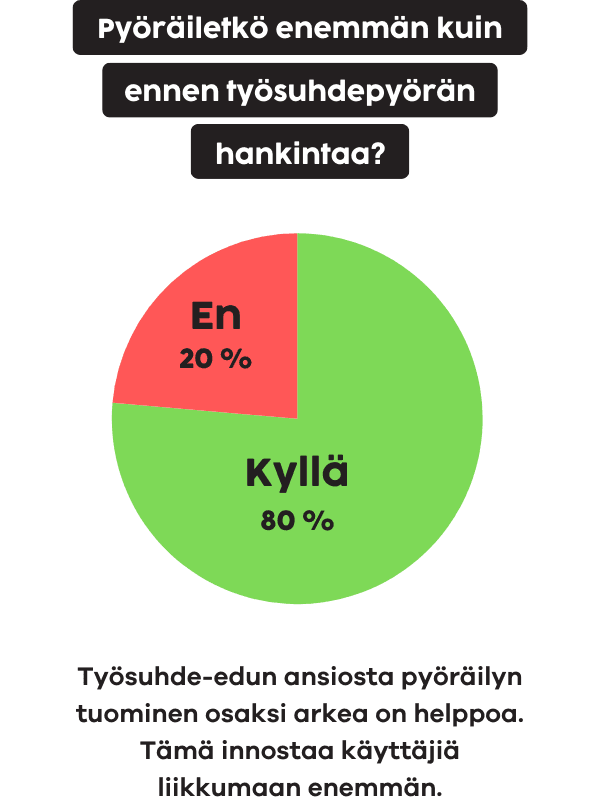
- 80% report cycling more than before after getting a benefit bike.
The benefit clearly gets people moving and builds activity into everyday life. Regular cycling supports both physical and mental health, reflected in energy and quality of life.
Question 2: How do companies experience the impact?
HR leaders who have used the benefit report mostly positive outcomes. Users cycle a lot, and wellbeing and stamina are perceived to have improved. The benefit supports recruitment and employees are satisfied. It is also a practical way to support wellbeing.
- Example: an internal ‘Kilometrikisa’ competition where teams collected cycling kilometers; the winner cycled 4,000 km/year and the challenge boosted team spirit.
Impact on sick leave: What do we know?
HR estimated sick leave reductions of roughly 5–7%. Cycling employees show generally better fitness and stamina. Many factors affect sick leave, but regular activity likely contributes positively.
Commute cycling adds regular activity that improves brain function, wellbeing and metabolism; resting heart rate and blood pressure drop, strength increases.
Respondents cycled on average 91.2 km per week. 10 km at moderate speed burns ~230 kcal, totaling ~2,100 kcal weekly for respondents.
Exercise benefits mental health: better mood, sharper thinking, lower stress, improved sleep; it also supports cognition in the long term.
Why does it work? Economics and psychology explain
Two drivers: financial attractiveness and health benefits of activity.
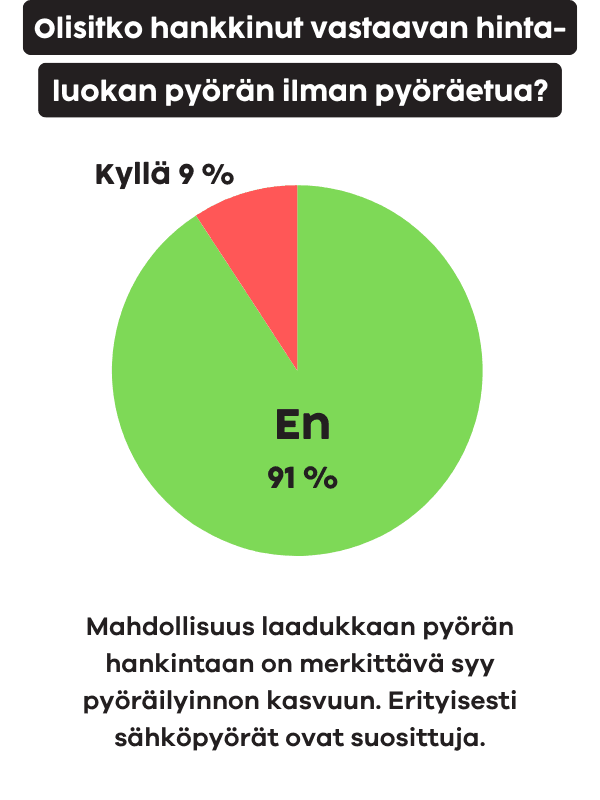
- 91% wouldn’t have considered a similar‑priced bike without the benefit.
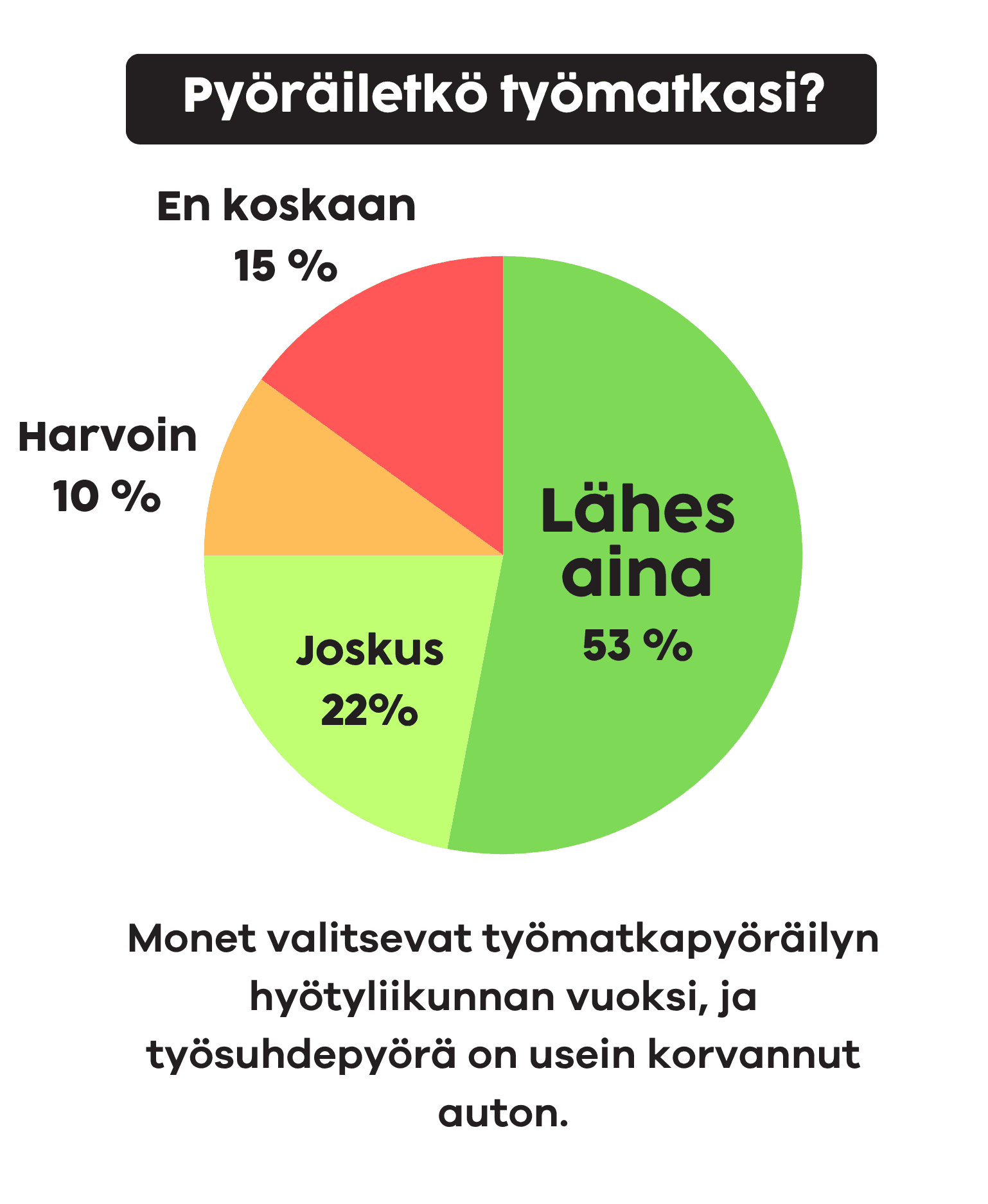
- 53% say they cycle nearly all commutes.
The benefit lowers the threshold to start an active routine and brings meaning to commutes. Activity as part of daily life improves wellbeing and can show up in stamina and productivity.
Question 3: How much more activity weekly?
We asked users how many days and hours they cycle per week.
- 57% cycle more than four hours per week.
- 74% cycle at least four days per week.
Cycling is a regular habit for many—great for health. 4+ hours per week already meets WHO’s moderate endurance recommendation.
Question 4: Top reasons to get a benefit bike?
The five most common themes mentioned by respondents:
- Access to a quality e‑bike
The benefit makes a better (e‑)bike financially possible.
- Smoother commutes
Faster, more comfortable trips; year‑round cycling becomes feasible.
- More activity & wellbeing
Encourages an active routine; fitness and energy improve significantly.
- Less car use & easier daily life
Cycling replaces car trips and reduces reliance on public transport.
- Cost‑effectiveness & tax benefit
Installments + tax benefit make the investment easier and cheaper.
The benefit meets multiple needs—financial, practical, wellbeing. Lower threshold plus smoother daily life make cycling attractive.
Final thoughts
Will the bike benefit keep momentum or fade as a trend?
Our studies show clear benefits: it gets employees moving, supports community wellbeing and attracts candidates. Even if precise sick‑leave impact is hard to measure, HR leaders observe better wellbeing and activity among cyclists.
For long‑term impact, companies must support routines. That’s how cycling becomes a lasting part of work life—supporting wellbeing and productivity.
Ready to adopt the bike benefit and lift your team’s wellbeing to the next level?
More information
THL and TTL publish research on active commuting. Employers and schools can encourage activity via facilities, benefit bikes and flexible hours.
TTL findings: those walking/cycling ~60 km weekly had ~10% lower risk of short sick leave and up to ~20% lower risk of long sick leave; about 4.5 fewer days absent per FTE.
TTL published research on commute cycling and reduced sick leave—read the publication
here.See THL’s publication on active work/school commuting
here.Survey conducted in December 2024.
Survey by Etufillari Oy, bike benefit provider